The Best Temperature for Sleeping at Night: A Guide to Your Ideal Sleep Climate
- zach4549
- Dec 2, 2025
- 13 min read
If you have ever tossed and turned, kicking off the covers only to pull them back on an hour later, you understand the frustration of a bedroom that is simply the wrong temperature. While many people search for complex sleep aids, the solution is often much simpler: your thermostat.
So let us get right to the heart of the matter. The ideal range for truly restorative sleep is between 65°F and 70°F (18.3°C to 21.1°C). This is not an arbitrary recommendation; it is a science-backed starting point for unlocking deeper, more refreshing nightly recovery.
Why Your Bedroom Climate Is a Pillar of Wellness
We all understand that good nutrition and regular exercise are cornerstones of a healthy life. But what about sleep? It is equally crucial, and the temperature of your bedroom is one of the most significant, yet most overlooked, factors affecting its quality.
The key lies in a fascinating process called thermoregulation—your body's innate system for cooling itself down to prepare for sleep. Think of it as a biological signal. As your core temperature drops by a few degrees, it tells your brain it’s time to produce melatonin, the hormone that orchestrates your sleep-wake cycle. A room that’s too warm forces your body to fight this natural process, leading to restlessness and a fragmented night.
The Science of a Cool Night's Sleep
A cooler room does more than feel comfortable; it actively helps your body perform its natural functions. When you align your environment with your body's rhythm, you create the perfect conditions for it to glide through the most important stages of sleep—deep sleep and REM. This is where the essential work happens, from physical repair to mental consolidation.
This guide will help you master your sleep climate. Setting the thermostat is a significant first step, but it is part of a larger picture. Creating a complete sleep system is where you will see the most profound results, and you can find more effective tips for better sleep to complement your new temperature setting.
The graphic below illustrates just how specific this optimal temperature zone is.
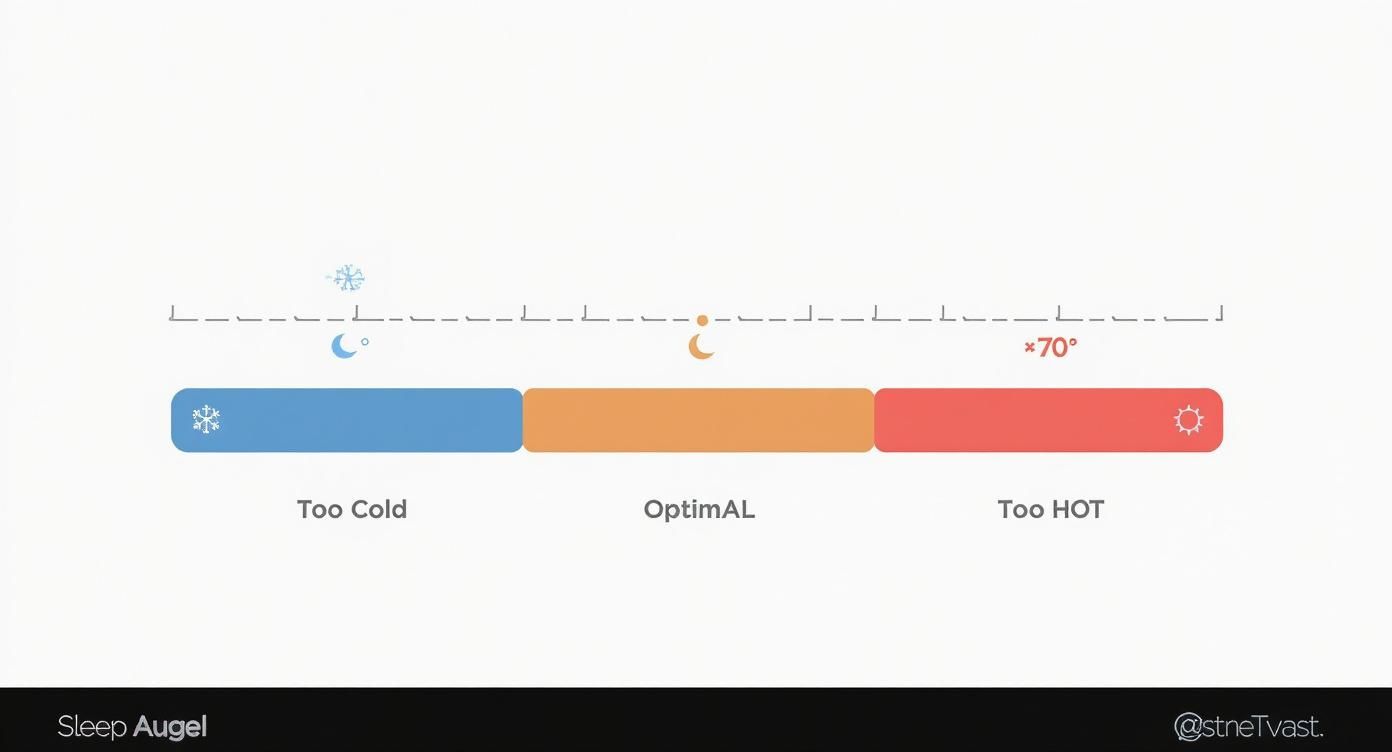
As you can see, that perfect window is quite narrow. It shows how easily a few degrees in either direction can disrupt your body's ability to achieve the deep rest it requires.
Quick Guide to Ideal Sleep Temperatures
To make this even clearer, here is a quick breakdown of how different temperature ranges can affect your night.
Temperature Range (°F) | Impact on Sleep Quality | Best For |
|---|---|---|
Below 60°F | Can disrupt sleep; may cause shivering and discomfort. | Not generally recommended, though some individuals prefer it very cold. |
60°F - 65°F | Excellent for promoting deep sleep and REM cycles. | Those who tend to sleep hot or prefer a cooler environment. |
65°F - 70°F | The optimal range for most adults; supports natural thermoregulation. | The vast majority of sleepers seeking peak sleep efficiency. |
70°F - 75°F | Can interfere with the body's cooling process; may lead to restlessness. | Individuals who are naturally cold or live in warmer climates. |
Above 75°F | Significantly reduces sleep quality; increases wakefulness and light sleep. | Only if no other cooling options are available. |
This table provides an excellent starting point, but remember to listen to your own body and adjust until you find what feels perfect for you.
The Impact of Just One Degree
The difference between a good night and a great one can be surprisingly small. A massive study analyzing 3.75 million nights of sleep revealed that for every 1°F increase in bedroom temperature (between 60°F and 85°F), sleep efficiency dropped by 0.06%.
That may not sound like much, but it accumulates. Higher temperatures were directly linked to sleeping for shorter periods and spending more time awake after initially dozing off. The conclusion is clear: the best results consistently fall in that 65°F to 70°F range.
How Your Body's Internal Clock Manages Sleep Temperature

Think of your body’s circadian rhythm as its own master conductor, a brilliant internal clock that cues countless systems to prepare for sleep. This is not just about feeling tired. It is a precise, biological process that actively manages your core body temperature to signal that it is time to rest.
Every evening, this internal clock prompts your core temperature to begin a slow, deliberate drop of about one to two degrees. This is not a random occurrence. This cool-down phase is the critical trigger telling your brain to start producing melatonin—the hormone that literally opens the door to sleep.
The Science of the Cool-Down Phase
That subtle temperature dip is your body’s gateway to truly restorative rest. As your core cools, it becomes far easier to slip past light drowsiness and into the deeper, more powerful stages of sleep: deep sleep and REM sleep. This is where the essential work of repairing tissue, cementing memories, and balancing hormones occurs.
When your bedroom is too warm, you place your body in an impossible position. You are asking it to fight its own natural programming. Your system must work overtime just to shed that extra heat, and that struggle often manifests as tossing, turning, and restless nights. This internal battle is one of the biggest culprits behind fragmented sleep that prevents you from reaching those vital, deeper stages.
"A cool sleep environment doesn't just provide comfort; it provides permission. It permits your body to follow its natural programming for deep, restorative rest without interference."
Once you understand why this cool-down matters, you can begin transforming your bedroom from just a place you sleep into a true sleep sanctuary. It is no longer about simply feeling cozy; it is about actively supporting your body’s nightly wellness routine.
How Your Sleep Environment Helps or Hinders
Your body has a built-in ventilation system: your skin, especially on your hands, feet, and head. It is constantly working to release heat, but it needs assistance from the outside world.
An Optimal Room: When your room is set to the right temperature, your body can effortlessly radiate its excess heat into the air. This seamless transfer lets your core temperature drop right on schedule.
A Warm Room: A hot bedroom is like trying to dry a damp towel in a sauna—it does not work. The air is already saturated with heat, making it incredibly difficult for your body to cool itself down efficiently.
This is precisely why the microclimate created by your mattress and bedding is so critical. Materials that trap heat essentially build a personal sauna right under the covers, directly sabotaging your body’s cool-down mission. For anyone living in warmer climates like Rancho Santa Fe or La Costa, where evening temperatures remain high, this can be a major sleep disruptor.
Ultimately, the goal is simple: align your external environment with your internal clock. Create a space where your body is not wasting energy fighting the room's temperature. That way, it can dedicate all its resources to the important work of repair and rejuvenation, letting you wake up feeling clear, focused, and genuinely restored.
Why Your Mattress Is a Key Player in Temperature Control
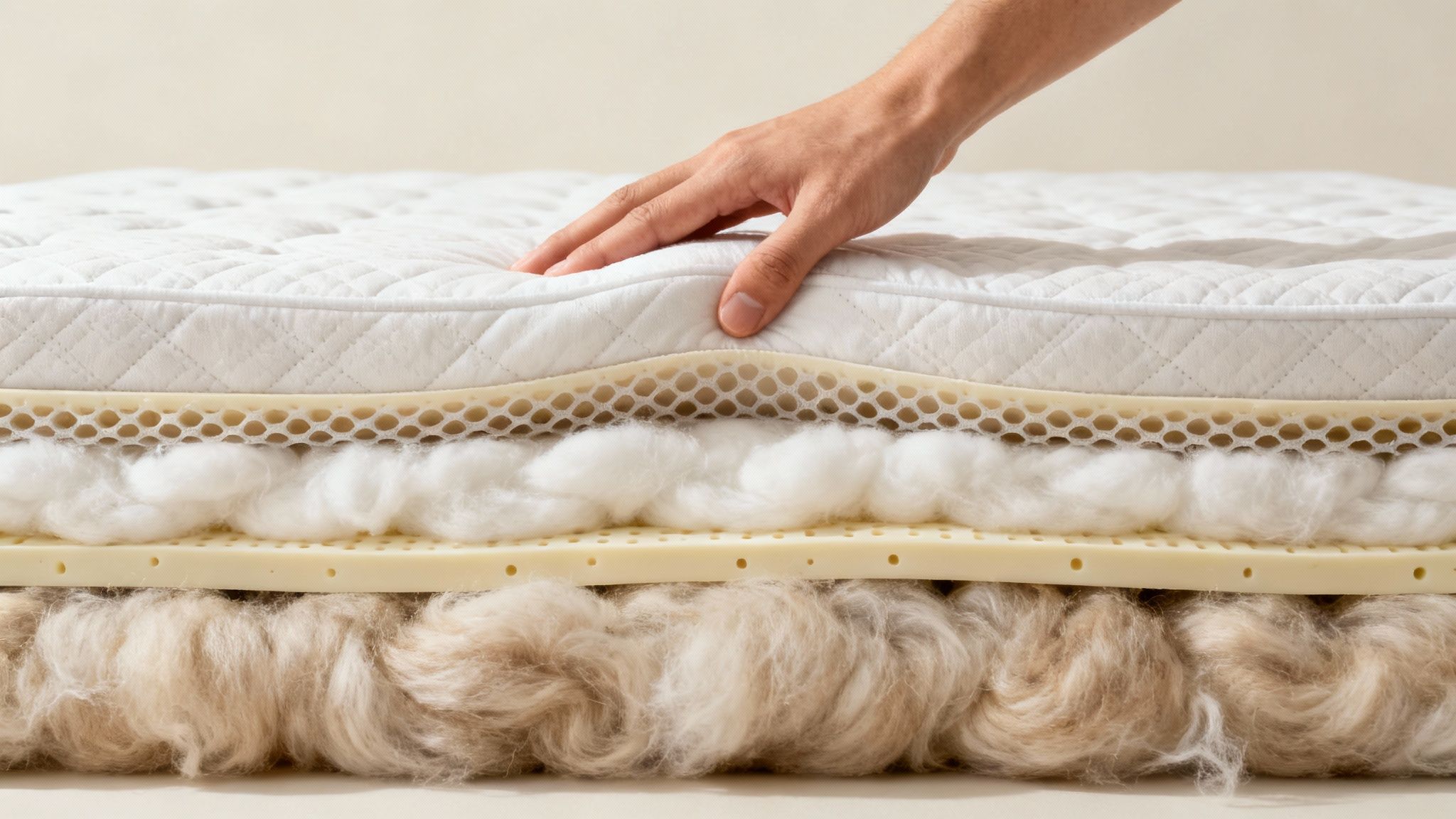
Even with the thermostat set perfectly, there is a far more intimate climate happening right under your sheets. This is your sleep microclimate—and your mattress is its chief architect. If you’re waking up sweaty in a cool room, your mattress is almost always the culprit.
Many mass-produced mattresses, especially the "bed-in-a-box" variety, are filled with synthetic, petrochemical-based foams like memory foam. While marketed for comfort, these materials are essentially insulators. They trap your body heat, prevent it from escaping, and then reflect it right back at you all night long.
This creates a hot, humid environment that works directly against your body's natural cool-down process. Instead of helping you sink into deep sleep, a synthetic mattress makes you fight for it, leading to the restless tossing and turning that ruins a good night's rest.
The Breathability of Natural Materials
A truly premium mattress is engineered for one thing above all else: breathability. Instead of trapping heat, it actively manages it. This is where the intelligent design of natural materials comes into play, creating a sleep surface that works with your body, not against it.
In our Carlsbad mattress studio, we guide clients toward sleep systems built with materials chosen for their performance. Here is a brief look at how these components create an ideal microclimate:
Natural Latex: Unlike its synthetic counterparts, natural Talalay latex has an open-cell structure that allows air to move freely. This built-in ventilation wicks away body heat and moisture, preventing that sticky, overheated feeling.
Joma Wool: Wool is nature’s most brilliant performance fiber. Its unique coiled structure creates thousands of tiny air pockets, offering cozy insulation in winter while promoting incredible airflow in summer.
Organic Cotton: As a cover fabric, organic cotton is soft, durable, and exceptionally breathable. It lets air circulate and moisture evaporate, keeping the surface of your mattress feeling fresh and dry.
These materials do not just feel better—they perform better. They are active partners in your thermal comfort, helping maintain the perfect temperature for sleeping by adapting to your body's needs.
How Superior Craftsmanship Enhances Airflow
The materials are only half of the story. The way a mattress is assembled is just as crucial for keeping you cool. Mass-market beds are often glued together layer by layer, creating impermeable barriers that choke off any potential airflow.
In contrast, artisanally made mattresses use superior techniques that amplify breathability.
Hand-tufting, for example, is a time-honored method where mattress layers are secured with durable woolen rosettes instead of glue. This creates natural channels that allow air to flow both vertically and horizontally through the mattress, carrying heat away from your body.
A two-sided, flippable design—a hallmark of quality craftsmanship—further promotes longevity and consistent airflow, ensuring the materials can breathe from every angle. This kind of detail transforms a mattress from a passive block of foam into an active, breathing sleep system. It ensures every component works in harmony to keep you cool, dry, and deeply asleep.
For residents in Carlsbad, Encinitas, and the surrounding coastal communities, managing sleep temperature is key for year-round comfort. Our curated guide on the best mattresses for hot sleepers in San Diego offers more insights into selecting materials that guarantee a cool night’s sleep. A well-designed mattress is your most powerful tool for mastering your personal sleep climate.
Finding Your Personal Sleep Comfort Zone
While science provides us with an excellent starting point, the perfect number on your thermostat is not a universal rule. It is deeply personal. Think of the recommended 65°F to 70°F range as a launchpad, not a strict command. Your ideal setting is your own unique thermal sweet spot, shaped by your body’s one-of-a-kind wiring.
Factors like your personal metabolic rate, age, and even gender play a significant role in what feels comfortable. Someone with a faster metabolism generates more heat and will likely prefer a cooler room. Someone who runs cold may need it a bit warmer. Understanding these nuances is the first step to dialing in your environment for truly exceptional sleep.
Individual Factors That Influence Your Ideal Temperature
Your body is not a static machine—its needs are constantly shifting and are completely different from anyone else's. As a Certified Sleep Coach, I often see guests in our Carlsbad showroom who are genuinely surprised to learn just how many personal details can nudge their ideal temperature away from the generic advice.
Here are a few of the primary variables to keep in mind:
Age and Metabolism: As we age, our metabolism can slow down, and our body’s internal thermostat becomes a little less efficient. This often means the window for what feels “just right” gets narrower.
Gender and Hormones: Hormonal shifts can have a powerful impact on body temperature. This is particularly true for women navigating perimenopause or menopause, where night sweats and hot flashes make a breathable, moisture-wicking mattress more of a necessity than a luxury.
Body Composition: Muscle generates more heat than fat. If you have more muscle mass, you will likely feel warmer at night and do better in a cooler room.
A fascinating 2023 study confirmed this, finding that while older adults slept best between 68°F and 77°F, there was a huge amount of person-to-person variation. The moment the temperature climbed above 77°F, their sleep efficiency took a nosedive, dropping by a significant 5% to 10%. It’s a clear reminder that your own physiology dictates your perfect sleep temperature. You can explore more about these findings on how individual needs define the perfect sleep temperature.
Navigating Temperature Differences with a Partner
For couples, the "thermostat war" is a real phenomenon. It is one of the most common roadblocks to a peaceful night's sleep. One partner is burrowing under the covers for warmth while the other is kicking them off, trying to cool down. This nightly battle can lead to fragmented, interrupted sleep for both people.
Thankfully, there are elegant solutions that do not involve separate bedrooms. The goal is to create a microclimate in your bed that works for both of you simultaneously.
A shared bed should be a sanctuary of mutual comfort, not a nightly battleground over the thermostat. The right sleep system allows for individual thermal peace without compromise.
Practical fixes range from simple tweaks to more advanced mattress designs. Using separate duvets or blankets of different weights is a classic, effective strategy. But for a truly seamless solution, the mattress itself can be the answer.
A mattress built with highly adaptive, natural materials like wool and latex can help regulate each person’s temperature independently. These materials do not just cool you down; they thermoregulate. They are brilliant at wicking moisture away from a hot sleeper while providing gentle, breathable insulation for a colder sleeper. This is where the artistry of a well-built mattress truly shines, creating a harmonious sleep environment where both partners can finally find their comfort zone.
Crafting the Ideal Cool Sleep Environment
Achieving the perfect sleep temperature involves more than just setting your thermostat to 67°F and calling it a night. Your bedroom is an entire ecosystem. Every single element either helps your body cool down or actively works against it.
Building a true sleep sanctuary means taking a deliberate look at everything from light and air circulation to the very materials you sleep on. These strategies are about taking back control of your environment, turning your room into a finely tuned space for deep, uninterrupted rest. This is a crucial piece of the wellness puzzle, and you can explore more in our guide to refined sleep hygiene tips for optimal wellness in Carlsbad.
Optimizing Your Room for Coolness
Before you even think about your bed, let's look at the room itself. A few simple adjustments can make a massive difference in keeping things cool and comfortable, especially during those warm Southern California nights.
Block Out Daytime Heat: This is non-negotiable. High-quality blackout curtains are not just for blocking light; they are a thermal shield. They stop the sun from baking your room all day, leaving it much cooler when it is time for bed.
Leverage Air Circulation: A ceiling fan is your best friend. It creates a gentle breeze that helps your body cool itself through convection. Just make sure it’s running counter-clockwise in the warmer months to push the cool air down where you can feel it.
The Critical Role of Breathable Bedding
The room is set. Now for your linens. The sheets and duvet you wrap yourself in have a direct impact on your skin temperature all night long. Many people unknowingly sabotage their sleep with synthetic fabrics that do little more than trap heat and sweat.
Your bedding should feel like a gentle cloud, not a plastic bag. Natural fibers are designed by nature to breathe, adapt, and regulate—qualities that synthetics simply cannot replicate.
Choosing the right materials is everything. Natural fibers like organic cotton, linen, and bamboo are powerhouses of breathability and are brilliant at wicking moisture away from your skin. This lets heat and humidity escape into the air, keeping you dry and comfortable instead of clammy and overheated.
Natural vs. Synthetic Bedding Materials
The performance gap between natural and synthetic materials is stark. Here is a quick comparison that shows why we only recommend natural fibers for a complete luxury sleep system.
Material | Breathability | Moisture Wicking | Commonly Found In |
|---|---|---|---|
Organic Cotton | Excellent | High | Luxury sheets, mattress covers |
Linen | Superior | High | High-end bedding, warm climates |
Joma Wool | Excellent | Superior | Artisanal mattress toppers, comforters |
Polyester | Poor | Low | Mass-market sheets, comforters |
Microfiber | Very Poor | Very Low | Inexpensive, synthetic bedding |
The takeaway is clear. Synthetic materials create a barrier that traps heat, directly fighting your body's need to cool down for sleep.
Natural fibers, on the other hand, work with your body’s thermoregulation. They are an essential part of getting the best temperature for sleeping at night. Your sheets, pillows, and mattress must all function as one cohesive, breathable system.
Common Questions About Sleep Temperature
To help you dial in the perfect sleep environment, we have gathered some of the most common questions our Certified Sleep Coaches hear right here in our Carlsbad showroom. These are the practical, real-world concerns people have, and the answers bring together everything we have discussed—from materials to personalization.
Think of it as your final check-in before a perfectly tempered night's sleep.
Is It Better to Sleep Too Cold or Too Hot?
This one is easy: it is generally better to be slightly too cool than too warm. Why? Because a cooler room works with your body’s natural temperature drop, which is a critical trigger for falling into that deep, restorative sleep you need.
Overheating does the opposite. It forces your body to fight its own biology, leading to more tossing, turning, and fragmented rest. A high-quality mattress built with breathable, natural materials like wool and latex acts as a buffer, regulating your immediate climate so you do not swing too far in either direction.
Can the Right Pillow Help Me Sleep Cooler?
Absolutely. A dense, synthetic memory foam pillow can trap a surprising amount of heat right around your head and neck—two of your body's key exhaust vents for warmth. It’s a sneaky and often overlooked cause of overheating.
A professional pillow fitting in Carlsbad is not just about finding the right height for your neck. It is also about its thermal properties. Pillows filled with natural materials like shredded latex, wool, or kapok have far better airflow. They pull heat away from your head, keeping you comfortable all night long as a vital part of your total sleep system.
Does Age Affect My Ideal Sleeping Temperature?
Yes, age is a significant factor. As we get older, our body’s internal thermostat can become less efficient. That comfortable temperature window often narrows, meaning a few degrees can suddenly make a much bigger difference than they used to.
On top of that, hormonal shifts, especially during perimenopause and menopause, can bring on night sweats and wild body temperature swings. This is where a highly breathable, moisture-wicking mattress becomes less of a luxury and more of an essential tool for consistent comfort, year after year.
The perfect sleep environment isn't static; it evolves with you. A responsive sleep system adapts to your changing body, ensuring deep rest remains a constant in your life.
How Long Should I Test a New Temperature Setting?
Patience is key. We recommend giving your body at least a full week to adjust to a new thermostat setting before you decide if it is working. When you do make a change, stick to small, one- or two-degree increments.
For even better results, keep a simple sleep diary. Jot down the temperature and a quick note on how you felt when you woke up. This small amount of data turns a general guideline into a personalized strategy, helping you pinpoint the exact temperature that unlocks your best sleep.
At Golden Dreams Mattress in Carlsbad, every guest enjoys a private concierge fitting with a Certified Sleep Coach. Book a free 20-minute virtual sleep consultation today and discover what luxury sleep really feels like.
Comments