10 Refined Sleep Hygiene Tips for Optimal Wellness in Carlsbad
Achieving deep, restorative sleep is a cornerstone of a well-lived life, influencing everything from daily performance to long-term health. While many sleep hygiene tips are widely known, their true power lies in precision and integration. It’s not just about avoiding a late-night coffee; it's about understanding the science of your circadian rhythm and creating a sanctuary that actively supports it. This guide moves beyond generic advice, offering refined strategies for the discerning individual who values wellness as the ultimate luxury.
We will explore how each element of your nightly ritual, from managing light exposure to timing your meals, can be optimized for maximum effect. More importantly, we’ll connect these powerful habits to the foundation of your rest: a truly personalized sleep system. You will learn how the right combination of a supportive mattress, a correctly fitted pillow, and breathable, natural materials can amplify your results. This transforms good habits into profound, lasting rest. This article provides a detailed roadmap to not only improve your sleep hygiene but to elevate your entire approach to nightly recovery, ensuring every minute in bed is restorative. By implementing these actionable insights, you can create an environment where exceptional sleep isn't a luxury, but a nightly reality.
1. Maintain a Consistent Sleep Schedule
Your body’s internal clock, or circadian rhythm, thrives on routine. Establishing a consistent sleep-wake cycle by going to bed and waking up at the same time every day is one of the most foundational sleep hygiene tips for optimizing this natural process. This consistency trains your brain to anticipate sleep and wakefulness, making it easier to fall asleep at night and feel refreshed in the morning.
Many high-performers, from elite athletes to top executives, rely on strict schedules to maximize cognitive function and physical recovery. This isn't about rigidity; it's about providing your body with the predictability it needs to perform its essential restorative functions.
How to Implement a Consistent Schedule
Start Gradually: If your current schedule is erratic, adjust your bedtime and wake time in 15-minute increments every few days. This gentle transition prevents the shock of an abrupt change.
Embrace Weekend Consistency: The biggest challenge for most is the urge to sleep in on weekends. Try to keep your wake time within an hour of your weekday schedule to avoid a "social jetlag" effect that disrupts your rhythm.
Be Patient: It can take several weeks for your body to fully adapt to a new schedule. Stick with it, and you'll begin to notice you wake up more naturally, often just before your alarm.
A supportive sleep system makes this consistency easier. When your mattress and pillow provide perfect alignment and pressure relief—something we specialize in with our pillow fitting Carlsbad service—you’re less likely to toss and turn, reinforcing a deeper, more predictable sleep pattern night after night.
2. Create a Dark Sleep Environment
Your brain is hardwired to associate darkness with sleep. Exposure to light, even minimal amounts, can suppress the production of melatonin, the essential hormone that signals your body it’s time to rest. Creating a pitch-dark environment is one of the most powerful sleep hygiene tips because it directly supports this fundamental biological process, helping you fall asleep faster and stay in deeper, more restorative sleep stages for longer.

Elite performers like sleep scientist Matthew Walker advocate for environments measuring less than 5 lux, a level of darkness where you can't see your hand in front of your face. This isn't about mere comfort; it's about giving your brain an unambiguous signal to shut down and begin its nightly repair work, which is crucial for cognitive function and physical recovery.
How to Implement a Dark Environment
Block External Light: To effectively create a dark sleep environment, consider installing window treatments specifically designed for superior light blockage, such as the best blackout shades or drapes. For a portable solution, a high-quality contoured sleep mask works wonders.
Eliminate Internal Light: Cover or remove electronics with LED displays, such as clocks, chargers, and televisions. Even a tiny pinprick of light can disrupt your melatonin cycle. Simple electrical tape can be a surprisingly effective tool here.
Test Your Room's Darkness: Wait in your bedroom for 10-15 minutes with the lights off to allow your eyes to fully adjust. If you can still easily see objects or outlines, your room isn't dark enough to optimize sleep.
A proper sleep system enhances the benefits of a dark room. When your body is perfectly supported and pressure-free, you are less likely to shift positions, allowing you to fully settle into the deep, uninterrupted sleep that a dark environment promotes.
3. Control Room Temperature
Your body’s core temperature must drop to initiate and maintain deep sleep, a process governed by your circadian rhythm. Setting your bedroom to a cool temperature is one of the most impactful sleep hygiene tips because it supports this natural physiological change. A cool room signals to your brain that it's time for rest, making it easier to fall asleep and stay asleep throughout the night.
This principle is leveraged by professionals whose performance depends on optimal recovery. For example, many elite athletes use specialized cooling systems to enhance sleep quality, and even NASA researchers have identified a range of 65-68°F as ideal for sleep. This isn’t about making the room uncomfortably cold; it’s about creating an environment that works with your body, not against it.
How to Implement Ideal Temperature Control
Find Your Sweet Spot: The ideal range is generally 60-67°F (15.5-19.4°C). Experiment nightly within this range to discover the precise temperature that feels most comfortable and restorative for you.
Automate Your Environment: Use a programmable or smart thermostat to automatically lower the temperature an hour before your scheduled bedtime. This ensures the room is perfectly prepared when you are.
Layer Your Bedding: Use breathable layers, such as a light duvet and a separate quilt, rather than one heavy comforter. This allows you to easily adjust your personal temperature without altering the room's ambient setting.
A cooling sleep system is the final piece of the puzzle. Materials like natural latex and wool are exceptionally breathable, wicking away heat and moisture to prevent overheating. When your mattress actively supports thermal regulation, you are less likely to wake up from discomfort, reinforcing a deeper and more consistent sleep cycle. Learn more about the best mattresses for hot sleepers on goldendreamsmattress.com.
4. Limit Screen Time Before Bed
The glowing screens of our phones, tablets, and computers emit a high-energy blue light that significantly disrupts your sleep-wake cycle. This artificial light signals to your brain that it's daytime, suppressing the production of melatonin, the hormone responsible for making you feel sleepy. This is one of the most critical sleep hygiene tips to master in the modern age, as studies show screen time can delay sleep onset by over an hour.
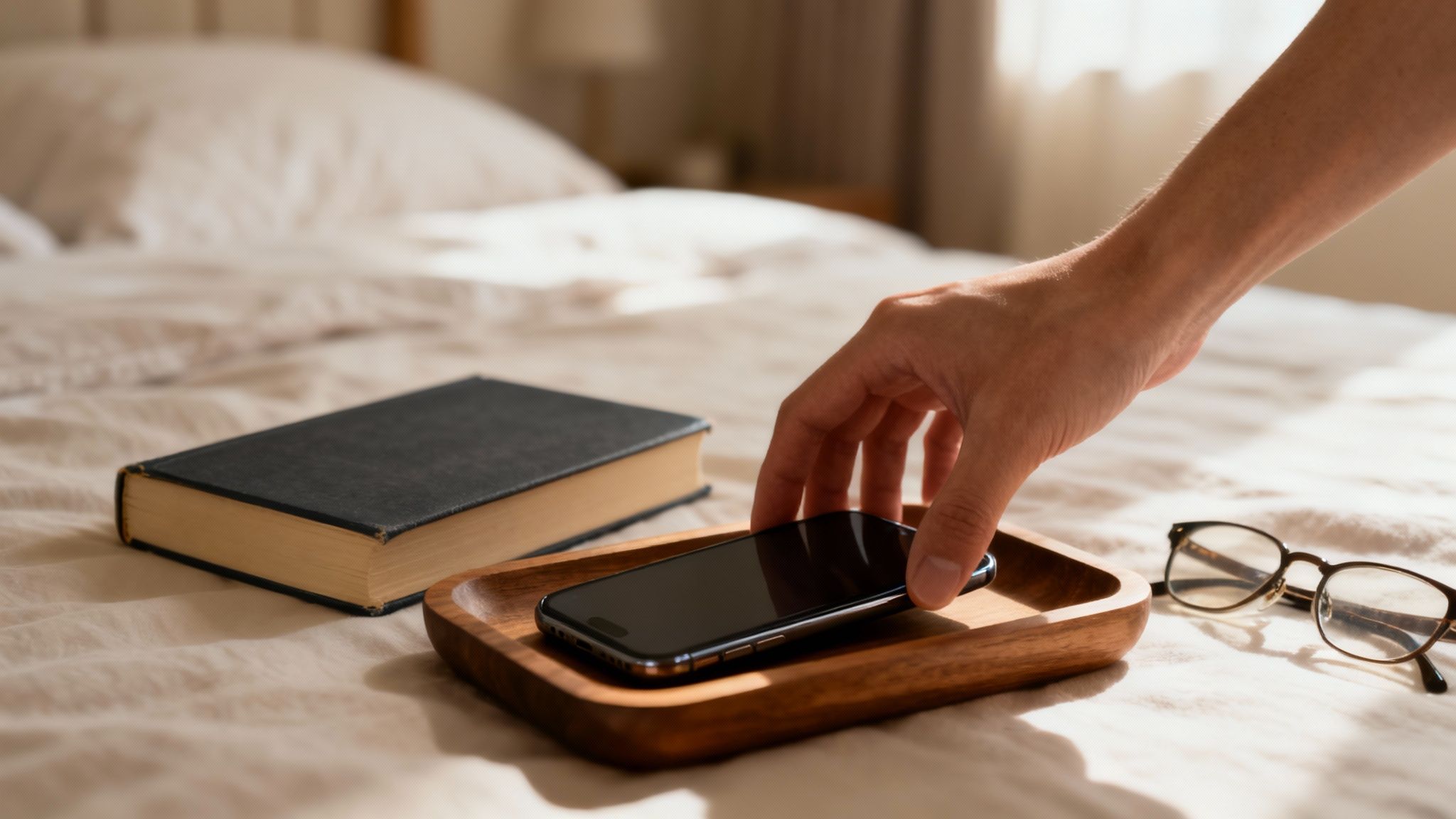
Dr. Matthew Walker, a leading sleep researcher, emphasizes that this digital disruption confuses our primal brain functions. Creating a screen-free buffer before bed allows your body’s natural melatonin levels to rise, preparing you for deep, restorative rest. For those who find it challenging to completely avoid screens, understanding blue light glasses benefits for better sleep and eye health can offer a practical solution.
How to Implement a Screen-Free Wind-Down
Create a Digital Curfew: Aim to power down all screens at least 60 minutes before your scheduled bedtime. Use this time for non-stimulating activities like reading a physical book, gentle stretching, or journaling.
Optimize Your Device Settings: If you must use a device, enable "Night Shift" on iOS or "Night Light" on Android. These features shift the screen’s color temperature to a warmer hue, reducing blue light exposure.
Establish a "Tech-Free Zone": Designate your bedroom as a screen-free sanctuary. Charge your phone in another room overnight to remove the temptation of late-night scrolling. This simple habit reinforces the psychological association between your bedroom and sleep. You can discover more quick sleep fixes and effective tips on goldendreamsmattress.com.
A properly fitted sleep system enhances this transition. When your body feels perfectly supported and comfortable, the desire to reach for a distracting device diminishes, making it easier to disconnect and surrender to sleep.
5. Avoid Caffeine After 2 PM
That afternoon cup of coffee might seem harmless, but it can significantly disrupt your sleep architecture long after you feel its stimulating effects. Caffeine has a half-life of 5-6 hours, meaning half of it is still active in your system that many hours later. This makes avoiding caffeine in the afternoon one of the most impactful sleep hygiene tips you can adopt for deeper, more restorative rest.
Even elite performers, such as military special forces and pilots, adhere to strict caffeine cutoff times to manage their sleep-wake cycles for peak operational readiness. For them, it is a non-negotiable part of maintaining cognitive function and physical endurance. This disciplined approach underscores how crucial timing is for everyone seeking optimal sleep.
How to Implement a Caffeine Curfew
Set a Hard Stop: Make 2 PM your absolute latest for any caffeinated beverage. Setting a clear boundary removes the guesswork and helps build a consistent habit.
Find a Satisfying Swap: Transition to non-caffeinated herbal teas like chamomile or rooibos in the afternoon. This still provides the comfort of a warm drink without interfering with your sleep.
Read the Labels: Be mindful of hidden caffeine sources. Chocolate, certain sodas, and even some "health" bars contain enough caffeine to disrupt your sleep if consumed too late in the day.
Track the Difference: Commit to a 2 PM cutoff for one week and note any changes in how quickly you fall asleep and how refreshed you feel upon waking. The results often speak for themselves.
Reducing stimulants allows your body to relax naturally. This relaxation is enhanced when your sleep environment is free from pressure points and heat buildup, a benefit provided by a well-designed mattress with breathable materials like natural latex and wool. A properly fitted sleep system works with your body’s rhythms, not against them.
6. Exercise Regularly (But Not Before Bed)
Regular physical activity is a powerful tool for enhancing sleep. It helps regulate your circadian rhythm, reduces the time it takes to fall asleep, and increases the duration of restorative deep sleep. This is one of the most impactful sleep hygiene tips because it addresses both physical and mental factors that can interfere with rest, such as stress and excess energy.
Elite athletes and performance coaches have long understood this connection. CrossFit competitors, for example, strategically time their intense workouts to maximize recovery and sleep quality, which are crucial for performance. Research has even shown that tennis players who get over eight hours of sleep per night have a 36% lower injury rate, highlighting how exercise and sleep are intrinsically linked.
How to Implement Smart Exercise Timing
Mind the Clock: Schedule your primary exercise sessions for the morning or early afternoon, ideally at least 6-8 hours before your planned bedtime. This gives your body temperature and stimulating hormones like cortisol time to return to baseline.
Opt for Gentle Evening Movement: If you need to move in the evening, stick to light, restorative activities. Gentle stretching, yin yoga, or a calm walk are acceptable and can even help signal to your body that it's time to wind down.
Stay Consistent: A regular exercise routine reinforces your sleep-wake cycle, much like a consistent bedtime. Aim for the recommended 150 minutes of moderate-intensity activity per week, and your body will thank you with deeper, more satisfying sleep.
A supportive sleep system is essential for muscle recovery after exercise. A mattress with zoned support and pressure-relieving natural latex helps soothe sore muscles and allows your body to fully repair itself, ensuring you get the maximum benefit from both your workout and your rest. For those with specific concerns, exploring the best mattress for side sleepers with hip pain can be transformative.
7. Use the 10-20-30 Rule for Napping
Strategic napping can be a powerful tool for enhancing alertness and cognitive performance, but timing is everything. Improper napping can lead to sleep inertia, that groggy, disoriented feeling that defeats the purpose. This is where the 10-20-30 rule, a key component of effective sleep hygiene tips, provides a clear framework for recharging without disrupting your nightly rest.
This guideline isn't just theory; it's backed by performance science. NASA famously found that a 26-minute nap improved pilot performance by 34% and alertness by 54%. Similarly, forward-thinking companies like Google provide dedicated nap pods to help employees maintain peak creativity and focus. Strategic napping is about precision, not indulgence.
How to Implement the 10-20-30 Rule
The 10-Minute Power Nap: For a quick boost of alertness before a demanding task or meeting, a 10-minute nap is ideal. It provides immediate restorative benefits without the risk of entering deep sleep, so you wake up sharp.
The 20-Minute Refresh: This is the sweet spot for most people. A 20-minute nap improves memory consolidation and clears brain fog. It's long enough to be effective but short enough to prevent you from entering the deeper stages of sleep, making it easy to wake up.
The 30+ Minute Cycle: Longer naps of 30 to 90 minutes should be approached with caution. While they can be deeply restorative, they often lead to sleep inertia upon waking unless you complete a full 90-minute sleep cycle. Reserve these for days when you are significantly sleep-deprived.
To make naps more effective, time them for early-to-mid afternoon (between 1-3 PM) when your body has a natural dip in alertness. A supportive pillow can make even a short nap more restorative by providing proper neck alignment, allowing your muscles to fully relax.
8. Establish a Pre-Sleep Wind-Down Routine
Just as an athlete warms down after a workout, your brain needs a cool-down period before sleep. Establishing a pre-sleep wind-down routine is a powerful sleep hygiene tip that signals to your body it’s time to shift from an active state to one of rest. This consistent 30-to-60-minute ritual helps lower cortisol levels and activates the parasympathetic nervous system, responsible for "rest and digest" functions.
This isn't an indulgence; it's a physiological necessity. Elite performance institutions and sleep clinics champion the concept of creating a 'sleep sanctuary' through routine, recognizing that the transition to sleep is as critical as sleep itself. A dedicated wind-down prepares your body and mind for deep, restorative rest.
How to Implement a Wind-Down Routine
Create Consistency: Your routine should be a sequence of calming activities performed in the same order each night. This creates a powerful pavlovian response, where each step reinforces the message that sleep is imminent.
Choose Calming Activities: Focus on things that soothe your nervous system. This could include reading a physical book (not on a screen), journaling, gentle stretching, or listening to calming music. Avoid stimulating conversations or stressful content.
Optimize Your Environment: Dim the lights and cool the room during your routine. Using a lavender essential oil diffuser can also promote relaxation.
Your wind-down routine is enhanced when you settle into a bed that feels like a sanctuary. A perfectly supportive mattress and the right pillow are key components of this environment. Learn more about how to choose the right pillow to complete your personalized sleep haven.
9. Manage Alcohol and Heavy Meals Before Bed
While a glass of wine or a large dinner might feel like a relaxing way to end the day, both can significantly disrupt your body's ability to achieve deep, restorative sleep. This is one of the most impactful sleep hygiene tips because it addresses common habits that directly sabotage sleep quality. Alcohol may induce drowsiness initially, but it fragments sleep later in the night by suppressing the crucial REM stage, leading to more frequent awakenings.
Professional athletes, for instance, are often advised to avoid alcohol entirely after a competition to maximize recovery, as it directly interferes with the body's repair processes during sleep. Similarly, a heavy, spicy, or fatty meal forces your digestive system to work overtime, which can raise your core body temperature and cause physical discomfort, preventing you from settling into deeper sleep stages.
How to Implement Better Pre-Sleep Fueling
Create a Buffer Zone: Finish your last large meal at least three hours before you plan to go to sleep. This gives your body ample time to digest.
Time Your Last Drink: Avoid consuming alcohol within 3-4 hours of bedtime to allow its initial sedative effects to wear off before you try to sleep.
Choose Smart Snacks: If you feel hungry before bed, opt for a light, sleep-supportive snack like a small banana, a handful of almonds, or a bit of yogurt.
Hydrate Wisely: Drink plenty of water throughout the day but taper off your fluid intake an hour or two before bed to prevent nighttime bathroom trips.
A well-designed sleep system supports these efforts by managing body temperature. Materials like natural wool and organic cotton excel at wicking away moisture and heat, helping to counteract the temperature increase caused by late-night digestion and ensuring a more stable, comfortable sleep environment.
10. Get Morning Sunlight Exposure
One of the most powerful signals for your body's internal clock is light. Getting exposure to bright, natural sunlight shortly after waking is a cornerstone of effective sleep hygiene tips because it sends a clear message to your brain to suppress melatonin production and start the day. This simple morning habit anchors your circadian rhythm, which not only promotes daytime alertness but also helps prepare your body for sleep later that evening.

Neuroscientists like Dr. Andrew Huberman from Stanford have popularized this concept, explaining how morning light exposure can improve sleep quality and mood. By triggering a timely cortisol release in the morning, you set the stage for a natural, gradual melatonin rise about 16 hours later, right when you want to be winding down. This isn't just theory; it's a biological mechanism that enhances energy and regulates your sleep-wake cycle with precision.
How to Implement Morning Light Exposure
Aim for 10-30 Minutes: Step outside within the first hour of waking. Even on overcast North County San Diego days, the natural light is far more potent than indoor lighting.
Combine with Movement: A morning walk in Carlsbad or Encinitas combines the benefits of sunlight and gentle exercise, further reinforcing your circadian signals.
Open Your Curtains Immediately: As soon as you wake up, let the light into your room to kickstart the process, even before you head outside.
Consider a Light Therapy Box: During darker winter months or on rainy days, a 10,000-lux light therapy box can serve as an effective substitute for natural sunlight.
When your body's internal clock is well-calibrated, your sleep becomes deeper and more restorative. A sleep system featuring breathable, natural materials like wool and cotton enhances this by regulating temperature, preventing you from waking up overheated and disrupting your carefully set rhythm.
10-Point Sleep Hygiene Comparison
Strategy | Implementation complexity | Resource requirements | Expected outcomes | Ideal use cases | Key advantages |
|---|---|---|---|---|---|
Maintain a Consistent Sleep Schedule | Moderate — habit change, 2–4 weeks to establish | Low — alarms, calendar reminders | More regular sleep onset, improved duration and daytime alertness | People with irregular sleep times or mild insomnia | Strengthens circadian rhythm, reduces need for sleep aids |
Create a Dark Sleep Environment | Low — one-time setup, initial adjustment | Low–Moderate — blackout curtains, eye mask, light-blocking fixes | Faster sleep onset, deeper REM/deep sleep, fewer disruptions | Light-sensitive sleepers, urban or shift workers | Maximizes melatonin production, high sleep-quality impact |
Control Room Temperature | Low–Moderate — thermostat or bedding adjustments | Moderate — thermostat, cooling pads, energy use | Reduced sleep latency, improved continuity, fewer night sweats | Hot sleepers, athletes, those waking at night | Direct physiological benefit to sleep architecture |
Limit Screen Time Before Bed | Moderate — behavior change and routine enforcement | Low — app filters or alternatives (books, meditation) | Shorter sleep latency, improved melatonin rise, better sleep quality | Heavy device users, students, evening workers | Cost-free, effective at preventing melatonin suppression |
Avoid Caffeine After 2 PM | Low — set cutoff and substitute drinks | Low — awareness, decaf or herbal alternatives | Improved sleep continuity, reduced time to fall asleep | Regular caffeine consumers with sleep problems | Simple change with measurable effect on sleep |
Exercise Regularly (But Not Before Bed) | Moderate — scheduling and consistency required | Low–Moderate — equipment optional or gym access | Reduced sleep latency, increased deep sleep, better mood | Active individuals, those needing better sleep depth | Multiple health benefits beyond sleep improvement |
Use the 10-20-30 Rule for Napping | Low — short timing rules and alarm use | Low — quiet spot, timer | Increased alertness and cognitive performance, risk of late-night interference | Shift workers, students, professionals needing an afternoon boost | Flexible, time-efficient performance gains |
Establish a Pre-Sleep Wind-Down Routine | Moderate — 30–60 min nightly habit | Low — reading, meditation, light stretching | Reduced sleep onset, lower anxiety, improved morning mood | Anxious sleepers, insomniacs, high-stress individuals | Targets stress physiology, highly customizable |
Manage Alcohol and Heavy Meals Before Bed | Moderate — social and dietary adjustments | Low — timing changes and food choices | Improved REM sleep, fewer awakenings, less reflux | Those who eat or drink late and experience disturbed sleep | Significant positive effects on sleep architecture |
Get Morning Sunlight Exposure | Low — brief daily practice within 1–2 hours of waking | Low — outdoor time or light therapy box in winter | Stronger circadian entrainment, better night sleep, higher daytime alertness | People with circadian disruption or seasonal mood changes | Free or low-cost, powerful circadian cue |
Your Personal Path to Exceptional Sleep Begins Here
Navigating the world of sleep science can feel overwhelming, but as we’ve explored, the path to restorative rest is paved with intentional, consistent habits. From establishing a steadfast sleep schedule to optimizing your bedroom’s climate and light exposure, each of these sleep hygiene tips serves as a vital tool in your wellness arsenal. Think of them not as rigid rules, but as invitations to reconnect with your body’s natural rhythms. The consistent practice of even a few of these strategies, such as creating a screen-free wind-down routine or prioritizing morning sunlight, can compound over time to produce profound improvements in your energy, mood, and cognitive function.
The true power of these habits is unlocked when they are built upon the right foundation. You can perfect every pre-sleep ritual, but if your body spends the night fighting an unsupportive or heat-trapping mattress, your efforts will be compromised. A generic, mass-produced bed-in-a-box simply cannot account for your unique physiology. This is where the concept of a personalized sleep system becomes essential. True luxury mattresses in Carlsbad are defined by their craftsmanship—hand-tufting, two-sided construction, and natural materials like latex and wool that offer unparalleled support and breathability. When your mattress, pillow, and base work in harmony, your body can finally enter a state of true, uninterrupted recovery.
Ultimately, mastering your sleep is an act of profound self-care. It’s an investment that pays dividends in every aspect of your life, from professional clarity to personal well-being. By integrating these actionable sleep hygiene tips into your daily life and supporting them with a sleep environment crafted for your specific needs, you are not just chasing a better night’s sleep; you are building a more vibrant, resilient, and fulfilling life. Your journey toward exceptional rest is a personal one, and it starts with the conscious decision to prioritize it.
At Golden Dreams Mattress in Carlsbad, every guest enjoys a private concierge fitting with a Certified Sleep Coach. We believe the ultimate sleep hygiene practice is a perfectly fitted sleep system. Book your complimentary 20-minute virtual consultation today and discover what luxury sleep really feels like.

Comments