What Causes Night Sweats While Sleeping? A Sleep Coach Explains

Waking in damp sheets is more than an inconvenience—it's a clear signal from your body that something is out of balance. If you've been wondering what causes night sweats while sleeping, the answer often lies in hormonal shifts, specific medical conditions, or your sleep environment itself. It’s a common challenge, and understanding the root cause is the first step toward reclaiming cool, restorative nights.
Decoding the Triggers Behind Night Sweats

Waking up drenched is disruptive, but you are far from alone. As Certified Sleep Coaches at our Carlsbad showroom, we find that our clients are often surprised by the sheer number of factors that can trigger this issue. The causes generally fall into three distinct categories: physiological, medical, and environmental. Each one plays a unique role in interfering with your body's ability to regulate its temperature as you rest.
Physiological triggers are often tied to natural hormonal shifts. Menopause and perimenopause are primary examples. These fluctuations can disrupt your hypothalamus—your brain's internal thermostat—leading to sudden, intense waves of heat that result in sweat-soaked sleepwear and sheets.
Medical and Environmental Factors
Certain medical conditions and medications are also significant contributors. Night sweats are more prevalent than many realize, affecting 10% to 41% of adults in primary care settings, with the highest rates occurring in those between 41 and 55 years old.
Obstructive sleep apnea (OSA) is a notable cause, with some studies indicating that up to 30% of sufferers also experience night sweats.
Often, night sweats are a symptom pointing to a deeper issue. Securing a proper diagnosis is crucial for finding relief, and resources on underlying disease management can be an excellent starting point for further education.
Finally, your bedroom environment is a powerful, and frequently overlooked, factor. The mattress and bedding you sleep on can either help your body breathe or trap heat directly against your skin. Synthetic materials like memory foam are notorious for this, turning a minor temperature fluctuation into a drenching event. This is precisely why we guide our clients toward breathable, natural materials that promote airflow and wick moisture away.
Primary Causes of Night Sweats at a Glance
To help you pinpoint the potential cause, we've organized the main triggers into clear categories. Consider this a quick reference to identify possible sources.
Category | Common Examples |
|---|---|
Hormonal Changes | Menopause, perimenopause, pregnancy, and certain thyroid conditions. |
Medical Conditions | Obstructive sleep apnea (OSA), infections, anxiety disorders, and some cancers. |
Medications | Antidepressants, steroids, and certain diabetes medications are common culprits. |
Lifestyle & Environment | Alcohol consumption, spicy foods, an overly warm room, or non-breathable bedding. |
Reviewing this list can help you begin connecting the dots. Your path to cooler nights begins with understanding these interconnected causes.
The Connection Between Hormonal Shifts and Your Sleep Temperature
For many of our clients, especially women in their 40s and 50s here in communities from Encinitas to Rancho Santa Fe, the answer to "what causes night sweats while sleeping?" often comes down to one word: hormones. This natural life transition can significantly disrupt your body’s ability to remain cool and comfortable throughout the night.
During perimenopause and menopause, estrogen levels decline. This change can send scrambled signals to your hypothalamus—the part of your brain that functions as your body's thermostat. The result of this miscommunication is a sudden, intense wave of heat. Known as hot flashes during the day, they become disruptive night sweats after dark.
How Hormones Disrupt Your Body's Thermostat
If this experience sounds familiar, you are in good company. These hormonal fluctuations are incredibly common, triggering night sweats in up to 85% of women. This is a well-documented vasomotor symptom stemming directly from declining estrogen, which destabilizes your body's temperature controls and leads to those sudden heat surges.
While the process is entirely natural, your sleep environment often determines whether these episodes are minor annoyances or full-blown sleep disruptions. A mattress that cannot breathe will only compound the problem.
Consider this: your body is trying to vent excess heat. A mattress made of synthetic foam acts like an insulator, trapping that heat and moisture against your skin. This creates a feedback loop of escalating discomfort, turning what might have been a manageable hot flash into a drenching sweat that jolts you awake.
Why Your Mattress Materials Matter
This is where the distinction between a mass-market bed and a true luxury mattress becomes clear. Most conventional mattresses rely on petrochemical-based memory foams, which are known for trapping heat due to their dense, closed-cell structure.
In contrast, a thoughtfully designed sleep system uses natural, breathable materials that work with your body. Materials like natural latex, organic cotton, and especially wool are brilliant at regulating temperature.
Wool, for instance, can absorb up to 30% of its weight in moisture without feeling damp. It actively wicks sweat away from your skin, keeping you dry and comfortable. This simple function allows your body to cool itself efficiently, breaking the overheating cycle and letting you settle into a deeper, more restorative sleep.
How Your Sleep Environment Can Exacerbate Night Sweats
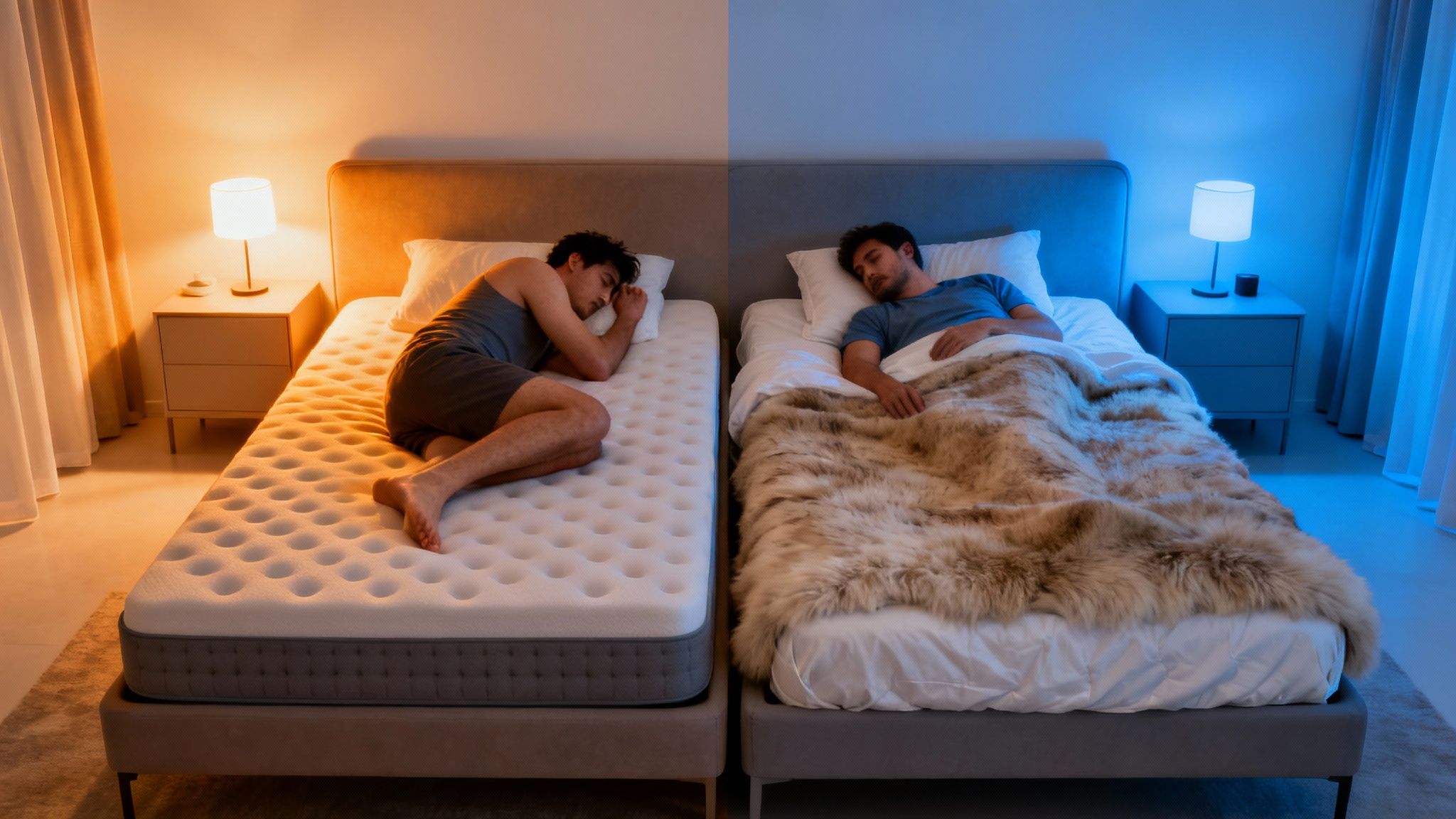
Before exploring complex medical causes, it's wise to start with the surface you spend a third of your life on. We often consult with clients in our Carlsbad showroom who reside in beautiful homes yet have overlooked the one furnishing they interact with for eight hours straight—their mattress.
The wrong mattress can absolutely worsen night sweats, turning a minor issue into a sleep-destroying problem.
The Problem with Trapped Heat
Many mass-produced mattresses are filled with petrochemical foams and synthetic fibers that simply don't breathe. This design flaw creates a humid microclimate beneath your covers, working directly against your body’s natural cooling mechanisms. Heat becomes trapped just when it needs to escape.
When your body attempts to cool down, it requires airflow. Dense, closed-cell memory foam acts as an insulator, reflecting heat back toward you and causing your sleep surface to grow warmer throughout the night.
This is a critical point. Your mattress isn't just making you feel warm; it may be actively preventing your body from regulating its temperature.
Your mattress should be a passive partner in your sleep, not an active obstacle. If it cannot breathe, neither can your skin. This creates a vicious cycle of overheating and sweating that shatters deep sleep.
Materials That Promote Airflow
This is where artisanal mattresses are constructed differently. They are crafted with natural, breathable components designed for superior temperature regulation.
Here’s what to look for:
GOLS-Certified Organic Latex: Unlike memory foam, natural latex possesses an open-cell structure. Air moves through it freely, preventing heat from building up.
Joma Wool® and Organic Cotton: These natural fibers are champions of moisture-wicking. Wool, in particular, absorbs significant moisture without feeling damp, pulling sweat away from your skin.
Hand-Tufting: This traditional construction technique secures mattress layers without glues. A key benefit is the creation of natural channels for air to circulate from the top of the mattress through to the bottom.
These are not just features; they are foundational elements for creating a balanced sleep climate. By choosing materials that work in harmony with your body, you can create a sanctuary that helps keep night sweats at bay. You can learn more in our guide to finding your ideal cooling mattress in Carlsbad.
The Surprising Link Between Sleep Apnea and Sweating
If your night sweats are accompanied by loud snoring, significant daytime fatigue, or morning headaches, it is worth exploring a potential connection to Obstructive Sleep Apnea (OSA). This common but serious condition causes breathing to stop and start repeatedly throughout the night.
Each time your airway becomes blocked, your body initiates an emergency response. It floods your system with adrenaline and cortisol—the classic fight-or-flight hormones. Your heart rate accelerates, and your body physically strains to take in air. That struggle generates considerable heat, often resulting in heavy, drenching sweats.
How Your Sleep Position Plays a Role
For our clients here in North County San Diego, understanding the physics of sleep can be a revelation. While OSA requires a medical diagnosis and treatment (often with a CPAP machine), your sleep system—your mattress and pillow—plays a vital supportive role. The wrong components can make matters worse.
If your pillow is too high or your mattress too soft, your head can tilt forward, further narrowing your airway. Conversely, a truly supportive sleep system helps maintain proper spinal alignment.
A correctly fitted mattress and pillow work as a team to keep your head, neck, and spine in a neutral line. This simple alignment can help keep your airways more open, potentially reducing the frequency and severity of apnea events.
The Importance of a Supportive Sleep System
To be clear: optimizing your sleep setup is not a substitute for medical advice. Rather, it is a complementary strategy to enhance comfort and support your prescribed treatment. A personalized fitting, like the private appointments we conduct in our Carlsbad studio, can identify the precise support your body needs to fully relax.
For instance, pairing the right mattress with an adjustable base allows you to sleep with your head slightly elevated. This position uses gravity to help keep airways clear naturally. We guide our clients in understanding how a supportive foundation can complement medical treatments and genuinely improve sleep quality.
To learn more, see our detailed guide on how adjustable bases can assist with snoring and sleep posture.
Designing a Sleep System for Cooler Nights
The most effective solution for night sweats is rarely a single product. It involves creating a complete sleep system—a thoughtful combination where your mattress, pillow, and base work in concert to keep you cool and perfectly supported.
This is where a personalized, data-driven fitting process makes a world of difference. Instead of a one-size-fits-all product, every component is selected to address your specific sleep challenges. A two-sided, hand-tufted mattress, for example, might feature a breathable wool-and-cotton side for summer and a cozier side for winter. An adjustable base can elevate your head just enough to open airways, easing your breathing so your body doesn't have to work—and sweat—so hard overnight.
Curating Components for Cool Comfort
This concierge approach is about building a sleep environment genuinely tailored to your body.
The Mattress as Your Foundation: We begin with naturally breathable materials like latex, wool, and horsehair. These allow air to circulate freely through the mattress, preventing heat from becoming trapped.
The Pillow as a Regulator: A proper pillow fitting ensures your head and neck receive precise support. Better alignment can dramatically improve breathing and overall comfort.
The Base as an Optimizer: An adjustable base enables you to find positions that improve airflow and reduce physical stress on your body—a common trigger for overheating.
This synergy matters because physical stress is often the root cause of the sweat itself. An event like sleep apnea, for instance, can trigger a panic response in the body that leads directly to sweating.
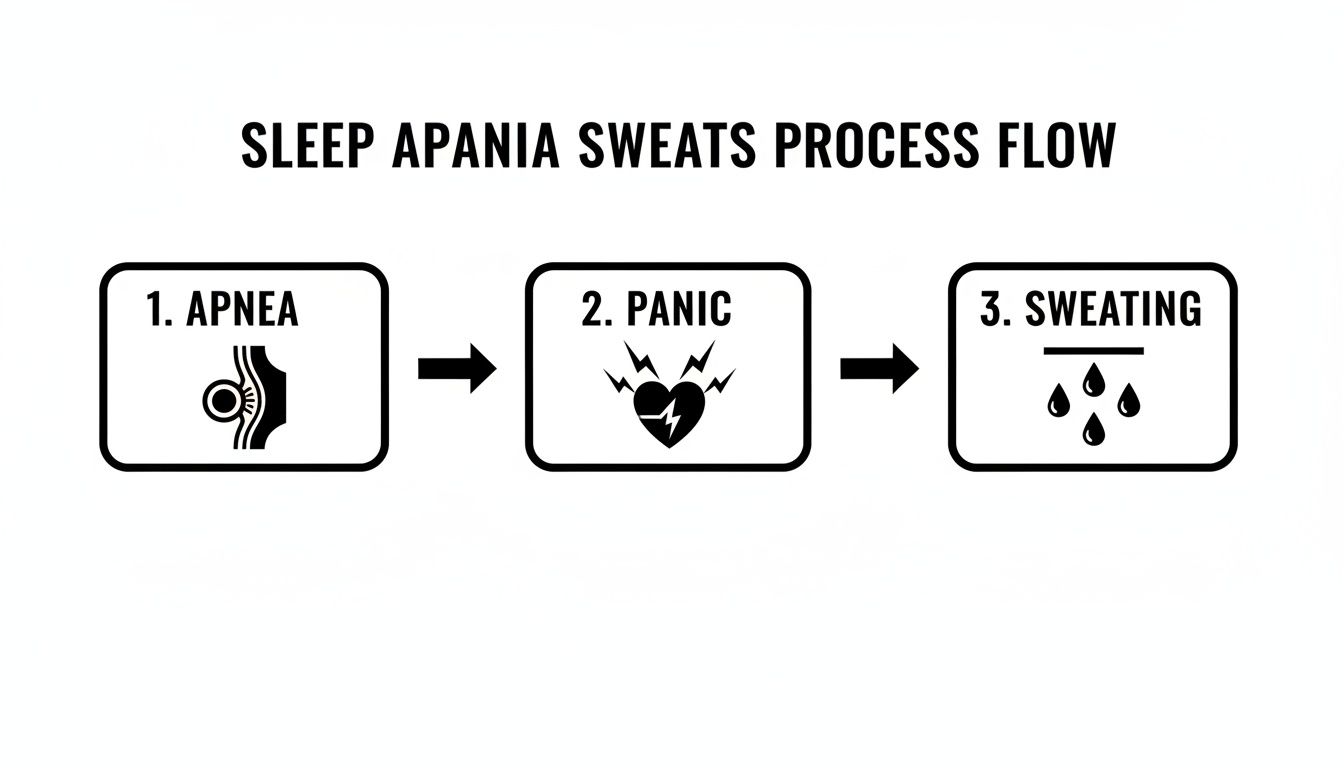
As this illustrates, there is a direct chain reaction: restricted breathing causes a stress response, which results in sweating. Understanding this connection clarifies why a supportive, holistic sleep system is so critical.
A well-designed sleep system is more than a luxury; it’s an integrated tool for better wellness. When you address temperature, support, and alignment simultaneously, you create the ideal conditions for a truly restorative—and cool—night's sleep.
For a deeper dive into building an ideal sleep environment, you can find helpful tips in resources focused on the quest to keep cool. You can also explore the best sleep accessories for your wellness journey right here on our blog.
Your Questions About Night Sweats Answered
In our Carlsbad showroom, our Certified Sleep Coaches frequently address the same questions about night sweats. We’ve compiled some straightforward answers to help you sleep cooler and more comfortably.
Can diet or evening habits contribute to night sweats?
Absolutely. A spicy meal, a late-night coffee, or an evening glass of wine can be the culprit. Spicy foods, caffeine, and alcohol can all raise your core body temperature and increase your heart rate, compelling your body to sweat to cool down.
This is often one of the simplest adjustments to make. Try to avoid these triggers for at least three hours before bed. Giving your body this buffer to wind down can make a significant difference in your sleep comfort.
What are the best sheet materials for people who experience night sweats?
Your sheets are your first line of defense against sleeping hot. The goal is to choose natural, breathable fabrics that excel at managing moisture rather than trapping it.
We recommend these materials:
Long-staple cotton: A classic for good reason—it’s soft, durable, and allows air to flow freely.
Linen: Exceptionally breathable and becomes softer and more comfortable with each wash.
TENCEL™ Lyocell: This plant-based fiber feels silky smooth and is a powerhouse at wicking moisture away from the skin.
These fabrics help pull sweat away from your body, allowing it to evaporate and keep you cool and dry. Synthetic materials like polyester or microfiber do the opposite, creating a barrier that traps heat and humidity against your skin.
When should I see a doctor about night sweats?
While optimizing your sleep environment is an excellent first step, it is not a substitute for professional medical advice. If your night sweats are persistent, severe, or accompanied by other symptoms, it’s time to consult your doctor.
Pay close attention if your night sweats are paired with other signs like unexplained weight loss, a recurring fever, or persistent pain. These can sometimes indicate an underlying condition that requires a professional diagnosis and a dedicated treatment plan. Your sleep system is a partner in your health, not a replacement for your doctor.
At Golden Dreams Mattress in Carlsbad, every guest enjoys a private concierge fitting with a Certified Sleep Coach. Book your complimentary 20-minute virtual sleep consultation today and discover what luxury sleep really feels like.

Comments